“How long should a resume be?” is one of the most common questions job seekers ask. The answer is simple, but not the same for everyone. Your resume length depends on your experience, your industry, and how relevant your background is to the job.
In this guide, SparkCV explains exactly how long a resume should be in 2025, when to use one page vs. two pages, and how to avoid the mistakes that get resumes ignored.
The Simple Rule: Most Resumes Should Be One Page
For the vast majority of job seekers, a one-page resume is not just acceptable — it’s ideal. Recruiters typically spend 6–7 seconds scanning each resume, and shorter documents make it dramatically easier for them to spot your key qualifications at a glance. A concise resume forces you to highlight impact, accomplishments, and measurable results rather than listing every task you’ve ever performed.
A one-page resume is the best choice for:
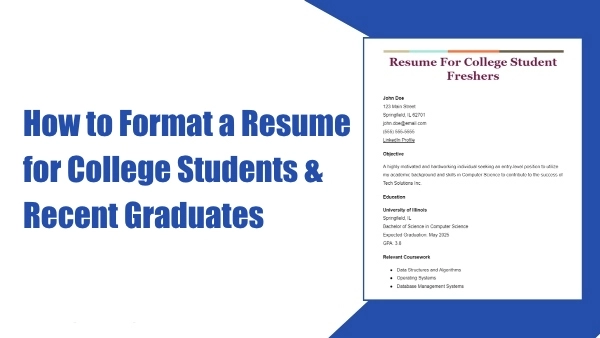
- Recent graduates with limited work experience
- Early-career professionals with 0–7 years of experience
- Candidates applying for internships or entry-level positions
- Job seekers who are staying within the same industry
- Anyone whose career history fits cleanly on a single page without sacrificing clarity
Keeping your resume to one page shows you can prioritize strategically, communicate efficiently, and present information in a way that respects the recruiter’s time — all qualities employers value highly.
A shorter resume isn’t “less impressive.” It’s often more powerful because every line serves a purpose.
When a Two-Page Resume Is Better
While a one-page resume is the standard, there are many situations where a two-page resume is not only acceptable but recommended. If you have a deeper career history, extensive achievements, or technical expertise, a single page can become too restrictive and lead to crowded text, reduced readability, or missing critical information.
Use a two-page resume if:
- You have 8+ years of professional experience
- You’ve held senior, management, or director-level roles
- Your field is technical (engineering, IT, cybersecurity, data science, biotech)
- You need space to highlight major projects, patents, publications, or accomplishments
- You’re applying to jobs where detailed documentation is expected (e.g., federal resumes)
- You’ve worked in multiple relevant industries and need to show your transferable expertise
A well-structured two-page resume gives you more room to show your achievements while keeping the layout clean and skimmable. Recruiters don’t mind a second page — they mind clutter. If your experience justifies the length and the formatting is clean, a two-page resume can actually strengthen your application.
Golden Rule: Only go to two pages if every section provides meaningful, relevant value. Avoid listing outdated roles, minor side gigs, or generic responsibilities.
Should a Resume Ever Be Three Pages? (Rarely)
A three-page resume is extremely uncommon for private-sector roles. In most cases, recruiters simply will not read documents that long. However, certain fields value depth, detailed credentials, and comprehensive documentation — making a three-page resume appropriate.
A three-page resume may be acceptable for:
- Executives (VP, SVP, C-suite), especially with global or multi-division oversight
- Academics, researchers, and scientists with extensive publication records
- Federal or government positions, which often require detailed descriptions
- Professionals with grants, patents, fellowships, or specialized certifications
- Clinical or medical roles with long lists of credentials or training
In many of these situations, the document resembles a CV (Curriculum Vitae) more than a traditional resume. Length matters far less than ensuring your credentials are fully documented.
How to Keep Your Resume the Right Length (Pro Tips)
Regardless of whether your resume is one, two, or three pages, your top priority should always be clarity and relevance. Here are practical ways to control resume length without losing valuable content:
1. Focus on accomplishments, not job duties
Transform generic responsibilities into measurable impact.
- “Responsible for managing social media accounts”
- “Grew social media engagement by 45% through targeted content strategy”
2. Remove outdated or irrelevant positions
Roles older than 12–15 years should be removed or summarized in a short “Early Career” section.
3. Use concise bullet points
Each bullet should represent one strong accomplishment, ideally with metrics.
4. Avoid long paragraphs
Blocks of text make resumes difficult to skim and reduce readability.
5. Tailor your resume to each job description
Delete anything that doesn’t support the role you’re applying for.
6. Combine similar or duplicate roles
If you held multiple roles at the same company, list them under one company header to save space.
These strategies ensure your resume stays the right length without sacrificing important details.
Resume Length by Career Stage (Quick Reference)
| Career Stage | Ideal Resume Length |
| Student / Recent Graduate | 1 page |
| Entry-Level (1–3 years) | 1 page |
| Mid-Level (4–9 years) | 1–2 pages |
| Senior Professional (10–15 years) | 2 pages |
| Director / Executive | 2–3 pages |
| Academic / Research | 3+ pages (CV) |
Resume Length by Industry
1. Industries That Prefer One Page
- Marketing
- Sales
- Customer service
- Retail
- Hospitality
- Creative roles (unless a portfolio is required)
These industries value quick communication and a clean one-page layout.
2. Industries That Commonly Accept Two Pages
- IT & Software
- Engineering
- Healthcare
- Finance
- Education
- Operations
- HR & Recruiting
These fields often require showcasing technical skills, complex projects, or measurable impact — making two pages perfectly appropriate.
3. Industries Where Three Pages or CVs Are Common
- Academia
- Research
- Science / Medical
- Government & Federal roles
These professions prioritize depth and complete documentation over brevity.
How Do Recruiters Feel About Resume Length?
Most job seekers worry far more about resume length than recruiters do. In reality, recruiters aren’t counting pages — they’re evaluating how quickly they can understand your value. A well-structured resume, whether one or two pages, will always beat a cluttered or overly condensed one.
What recruiters strongly dislike:
- Dense text walls that feel overwhelming or exhausting to read
- Long paragraphs instead of scannable bullet points
- Irrelevant job history, especially unrelated early roles
- Recycled or repetitive bullet points across positions
- Fluff and buzzwords without measurable accomplishments
What recruiters consistently prefer:
- Clear, punchy accomplishments with quantifiable results
- Logical formatting that guides the eye naturally
- Metrics that demonstrate real impact (%, $, KPIs)
- Experience that aligns with the job description
- An easy-to-skim structure, especially on mobile devices
A clean, organized two-page resume with clear spacing is often far more effective than a cramped one-page resume that tries to fit everything using tiny text. In other words: readability > length every time.
Common Mistakes People Make With Resume Length
Many applicants sabotage their chances by trying too hard to control the page count. Here are the resume-length mistakes that U.S. recruiters frequently cite as deal breakers:
- Shrinking the font below 10 pt to squeeze in additional content
- Reducing margins to fit more text, making the layout look cramped
- Including outdated roles from 15–20 years ago that add no value
- Listing basic or irrelevant skills such as “Microsoft Word,” “Typing,” or “Email”
- Adding unnecessary personal details (age, marital status, full address)
- Writing long job descriptions instead of concise, achievement-focused bullets
- Including every project ever completed, instead of the most relevant ones
The rule is simple: Your resume should tell a focused story — not a complete autobiography.
Example: Perfect One-Page Resume Structure
A one-page resume works extremely well when your experience is limited, clear, or very relevant to the role you're applying for. Here's what a clean, effective single-page resume should include:
Header
Name, job title, email, phone number, LinkedIn, portfolio (optional)
Summary
A short 2–3 sentence overview highlighting your strengths and career focus
Skills
6–10 relevant, job-specific skills
Work Experience
- Two to three of your most recent and relevant roles
- 3–5 bullets per role, focused on results and metrics
Education
Degree, school name, graduation date (optional for senior roles)
Certifications (Optional)
Relevant certifications only — keep it brief
Ideal for:
Students, recent graduates, early-career professionals, and applicants with under seven years of experience.
Example: Perfect Two-Page Resume Structure
A two-page resume gives experienced professionals room to highlight their career depth without overwhelming readers.
Page 1:
- Header
- Professional Summary
- Core Skills / Technical Skills
- Most Recent Work Experience (2–3 roles with detailed accomplishments)
Page 2:
- Additional Experience
- Key Projects or notable achievements
- Certifications & Training
- Technical Skills (expanded, if applicable)
- Education
- Awards / Publications (optional)
- This format ensures that your most impactful information appears on the first page — where recruiters spend most of their time — while still giving you room to showcase deeper experience.
Ideal for:
Mid-career professionals, senior roles, technical careers, managers, and specialists.
Final Answer: How Long Should a Resume Be?
Here’s the essential breakdown:
One page
Best for most candidates with 0–7 years of experience, including students, graduates, and early-career professionals.
Two pages
Ideal for applicants with 8+ years of experience, those in technical roles, senior-level professionals, or anyone with multiple accomplishments worth showcasing.
Three pages
Only appropriate for a small number of cases, such as:
- Executives (Director, VP, C-suite)
- Academics / research professionals
- Federal government roles
- Medical or scientific careers requiring detailed documentation
The golden rule:
- Your resume should be as long as it needs to be — and as short as possible.
- Keep everything relevant, results-focused, and easy to read, and the appropriate length will naturally fall into place.
Format Your Resume Instantly With SparkCV
Keeping your resume the right length can be challenging — especially when balancing experience with readability. SparkCV simplifies the entire process.
With SparkCV’s Free Resume Builder, you can:
- Use professionally designed 1-page and 2-page templates
- Automatically fit your resume to the optimal length
- Maintain perfect spacing, margins, and font sizes
- Generate strong resume content with AI
- Download instantly in PDF or DOCX
- Create matching cover letters in seconds
Build a perfectly sized, ATS-friendly resume in minutes — no formatting skills needed.