When you apply for a professional role in the US job market, your ability to collaborate effectively is just as important as your technical skills. That’s why many employers rely on behavioral interview questions teamwork to evaluate how you interact with others, handle conflict, and contribute to a team’s success.
This guide covers the most common teamwork-related behavioral questions—plus sample answers and tips to help you stand out in your next interview.
Why Employers Ask Behavioral Interview Questions About Teamwork
Teamwork is essential in nearly every modern workplace. By asking behavior-based questions, hiring managers aim to understand:
- How you collaborate with colleagues
- Your communication style under pressure
- How you handle disagreements or personality differences
- Whether you take accountability and support team goals
- How you contribute to a positive, productive work environment
Your past behavior is the strongest indicator of how you’ll perform on the job, making these questions some of the most important in a behavioral interview.
Top Behavioral Interview Questions Teamwork
Teamwork is one of the most sought-after skills in today’s workplace. Employers want to know not only whether you can complete tasks, but whether you can collaborate effectively, resolve conflict, and contribute to a positive team culture. Below are the most common behavioral interview questions about teamwork, along with expanded STAR-format sample answers to help you prepare confidently.
1. “Tell me about a time you worked successfully on a team.”
Sample Answer (STAR):
Situation:
My team was assigned to launch a major product feature within six weeks—a tight timeline that required close collaboration between design, engineering, and quality assurance.
Task:
As the project coordinator, I was responsible for aligning all three groups, ensuring that tasks were sequenced correctly, and monitoring progress daily.
Action:
I created a shared project plan outlining every dependency, milestone, and owner. To maintain strong communication, I initiated short daily stand-ups and established a dedicated Slack channel for quick issue-tracking. Whenever we faced a blocker, I facilitated real-time problem-solving to prevent bottlenecks.
Result:
The team delivered the feature on schedule, even with the ambitious deadline. After launch, user engagement increased by 25% in the first month, and the streamlined workflow became a model for future projects.
2. “Describe a time you helped a team member who was struggling.”
Sample Answer:
In a previous role, I worked with a teammate who struggled to understand a newly implemented platform. I noticed he was falling behind and seemed hesitant to ask for help. I initiated a one-on-one session to walk him through the workflow, created simplified reference notes he could use independently, and broke his assignments into manageable tasks to build confidence.
Within two weeks, he was working at full speed. By the end of the quarter, he exceeded his performance targets by 30% and expressed appreciation for the support. This experience reinforced my belief in early intervention and empathy within teams.
3. “Tell me about a conflict you faced in a team and how you resolved it.”
Sample Answer:
During a high-priority project, two senior team members disagreed on the technical approach we should take. Their conflict began slowing the team’s progress and creating tension. I stepped in and facilitated a structured discussion where each member presented the reasoning, data, and potential risks behind their preferred solution.
By shifting the conversation from personal preference to long-term project goals, we were able to reach a hybrid solution that utilized the strengths of both proposals. This resolved the conflict, eliminated delays, and significantly improved our communication dynamic moving forward.
4. “Give an example of a time you collaborated with someone difficult.”
Sample Answer:
Earlier in my career, I worked with a teammate known for being dismissive of others’ ideas. Instead of responding defensively, I made an effort to understand his motivations and asked open-ended questions to encourage more balanced conversations. Over time, he realized I valued his expertise but also expected mutual respect.
As our relationship improved, communication became smoother and more productive. Ultimately, our collaboration helped the team complete deliverables 15% faster that quarter. This experience taught me the importance of patience and professional empathy in team environments.
5. “Describe a time your team failed. What did you learn?”
Sample Answer:
My team once underestimated the workload for a major client deliverable, resulting in a missed deadline. Instead of assigning blame, I proposed a retrospective meeting to identify gaps in planning, communication, and resource allocation.
We discovered our estimation method lacked enough buffer time and did not account for cross-team dependencies. As a result, we updated our planning framework, added contingency time to future schedules, and established clearer ownership for each task. These improvements helped ensure that all subsequent projects were completed on time.
Additional Behavioral Interview Questions on Teamwork (20+ Examples)
To strengthen your preparation, review these commonly asked teamwork questions across different categories:
Collaboration & Coordination
Describe a successful team project you were part of.
Tell me about a time you coordinated with other teams or departments.
How do you handle working with colleagues who have different work styles?
Give an example of how you ensure collaboration stays on track.
Communication
Tell me about a time you clarified a misunderstanding within your team.
How do you keep teammates informed about progress and priorities?
Give an example of feedback you delivered that improved team performance.
Describe a time you adapted your communication style for a teammate.
Conflict Resolution
Tell me about a disagreement you helped resolve.
How do you approach situations where someone challenges your ideas?
Describe a time you mediated a conflict between coworkers.
Tell me about a time you prevented a small issue from escalating.
Ownership & Accountability
Describe a time you took responsibility for a mistake made by the team.
Tell me about a time you supported a decision you initially disagreed with.
How do you handle teammates who are not meeting expectations?
Give an example of how you reinforced accountability within a group.
Team Performance
Tell me about a time your team exceeded expectations.
Describe a moment when you boosted team morale.
Give an example of how you improved team efficiency or workflow.
Tell me about a time you helped your team overcome a major challenge.
How to Answer Behavioral Interview Questions About Teamwork Effectively
To make your answers compelling and memorable, keep these best practices in mind:
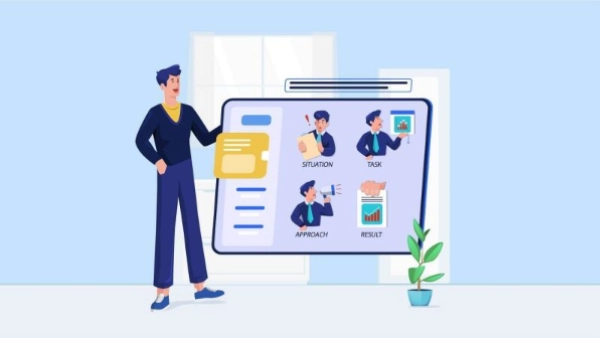
Use the STAR Method
Break your answer into Situation, Task, Action, and Result for clarity and impact.
Highlight your specific contribution
Even in team-based stories, recruiters want to know what you personally did.
Support your claims with measurable outcomes
Numbers, KPIs, and concrete results make your answers more credible.
Demonstrate emotional intelligence
Show that you can communicate respectfully, empathize, and navigate interpersonal challenges.
Stay positive—even when discussing conflict or failure
Focus on solutions, growth, and lessons learned rather than dwelling on negatives.
Conclusion
Mastering behavioral interview questions about teamwork is essential for anyone aiming to succeed in collaborative, fast-paced environments. By preparing thoughtful examples, practicing the STAR method, and showcasing your interpersonal, communication, and conflict-resolution skills, you’ll position yourself as a strong, reliable team player—exactly what employers want.